
Muhurat Trading 2026 Checklist: 12 Tips for Beginners
Get ready for Muhurat Trading on 8 November 2026 with 12 checks covering Demat setup, KYC, funds, orders, session timings, settlement and investor risks.
Summary: Muhurat trading 2026 is on the 8th of November and begins at 2:20 pm. If you are new to trading, you should check your trading and demat accounts, KYC, available funds, trading hours, order types and settlement before making any decisions related to trading.
Key Takeaways
- NSE permits continuous trading in equity from 2:20 pm on 8 November 2026.
- Continuous trading of securities subject to Centralized Audit of Settlement (CAS) stops at 3:15 pm, while trading of other securities stops at 3:30 pm.
- Make sure you have activated your Demat and trading accounts, completed your KYC, and confirmed the funds available with your broker before placing any orders.
- Know about the types of orders and charges, as well as the exchange settlement obligations.
- Trading during this period does not guarantee profits. Research the products and do not trade impulsively or on margin.
Last updated: 4 November 2026 (IST). About to place your first Diwali stock market trade? Here’s a checklist of 12 things to review before the special Muhurat Trading 2026 session on 8 November. Begin with active Demat and trading accounts, and completed KYC. Arrange cleared funds. Research what you plan to buy, and understand the peculiar market timings. The festive tradition does not change the risk associated with investments.
New to stock market investing? A Demat account holds shares electronically, and a trading account places exchange orders. Explore online Demat account opening and application assistance before the session. It’s activated by successful verification.
Muhurat Trading 2026: timings to know
NSE's 19 October 2026 official equity circular confirms the date and a staggered schedule. The pre-open runs from 2:05 PM to 2:20 PM IST. Continuous trading begins at 2:20 PM, but eligible Closing Auction Session (CAS) stocks leave continuous trading earlier than other stocks. See our full Muhurat Trading 2026 date-and-time guide for additional session details.
Equity-market phase | Time (IST), 8 Nov |
|---|---|
Pre-open | 2:05–2:20 PM |
Continuous trading: CAS-eligible stocks | 2:20–3:15 PM |
Continuous trading: non-CAS stocks | 2:20–3:30 PM |
CAS order entry and matching | 3:20–3:35 PM |
Post-close session | 3:50–4:00 PM |
Pre-open and auction phases have special order-entry rules and random closures. Check your broker's cut-off time, which can be earlier than the exchange's closing time.
Muhurat Trading 2026 checklist: 12 beginner preparations
1. Confirm your Demat and trading accounts are active
A Demat account holds securities in electronic form, and a trading account facilitates the placement of buy/sell orders on the exchange. Ensure full activation of the accounts, that the equity segment is enabled, and that the accounts can be accessed without any issues. If accounts are not opened, check the Demat account opening process and required documents. The account opening process is completed by a Third party (InvestEdge360, operated by Vijayvargiya Financial Services) as an Authorized Business Partner of Motilal Oswal Financial Services Limited. It is not the official Website of Motilal Oswal.
2. Complete KYC and check your personal details
The broker can ask for additional documents for verification and e-sign. It is important to verify that the information provided by you, including the bank account and mobile/email details, is entered correctly. The SEBI Investor Education Portal elaborates on the function of Demat, trading and bank accounts. Just because an application is submitted does not mean the accounts will be activated the same day.
3. Arrange usable funds before the Sunday session
Availability of funds can differ from your bank balance. Settlement holidays can delay when credits and proceeds are available to trade. Brokers impose their own transfer and collateral deadlines. Contact your broker to ensure funds are available before 8 November.
4. Decide your spending limit
Decide how much you are willing to spend. Security prices, size and costs must be evaluated if you wish to stick to a budget of ₹5,000. You are not required to trade a certain amount to make the session auspicious.
5. Research a small watchlist instead of festive tips
Coming up with a research watchlist of 2-3 securities is ideal. For equities, research the business and evaluate earnings, valuation, debt and main risks. For ETFs, research underlying holdings, cost ratio, tracking difference and liquidity. Do not blindly follow a stock that's moving up in the short term.
6. Understand market and limit orders
A market order is executed at the best available price, which may differ from the displayed price. A limit order is executed at your desired price if it is within the market price, but may not be executed. There are different order types during the pre-open and the CAS phases. Read your broker's special-session instructions before transacting or modifying an order.
7. Know what product you are buying
Different products such as Delivery Shares, Index ETFs, and Precious Metal ETFs have various risks and costs. Though gold and silver are traditionally bought for gifting during festivals, their prices can also go down. Readers interested in them can go through this Dhanteras Gold and Silver ETF explainer. It is an educational article and not an endorsement to buy.
8. Check brokerage, taxes and other charges
Look into brokerage, STT (where applicable), exchange fees, GST, stamp duty and depository charges (if any) for the trade. Different brokers have different promotional schemes and waivers for brokerage. Some brokers may charge a nominal fee for trades that are normally free. Rely on specific tariffs shown to you by your broker rather than social media claims.
9. Verify settlement and holdings availability
The NSE states that trades executed during Muhurat Trading create real settlement obligations. Its special schedule is not a simulated market. If you purchased shares before the session, verify that they are reflected in your available-to-sell holdings. Settlement and availability of funds can differ based on the trading date and the broker.
10. Avoid leverage and unfamiliar F&O trades
Leverage can work both ways, and people can lose money in a short time period. New investors should not assume that an auspicious day makes F&O or intraday trading risk-free. For context, the NSE equity derivatives circular states that F&O trading will be continuous from 2:20 PM to 3:40 PM, which is different from the cash market. Concentrate on products you understand.
11. Test your login and prepare an order checklist
Once logged in, you must verify your account security. Keep your registered mobile device accessible for verification. Make sure you’re using your broker’s authentic app or website. Double-check the company/ETF name, exchange, quantity, order type, price, available funds and total estimated cost and then confirm the order. Never share your OTP or password with anyone.
12. Check execution and contract notes afterwards
An order may be pending or be fully or partially executed, rejected, or cancelled. You need to review the final status of your order and the contract notes. After you review these documents, reconcile your holdings and cash balance. Keeping a sensible long-term plan for investing is important and will help you avoid stressing over short-term changes in the market.
Final five-minute check before placing an order
Account active, KYC complete, and equity segment enabled.
Cleared trading balance available; fees and limits understood.
Security researched, quantity chosen and order type reviewed.
Correct CAS or non-CAS schedule and broker deadline checked.
Risk affordable; no expectation of guaranteed festival profits.
Conclusion: prepare first, trade only when ready
Muhurat Trading is a festival where one can start their trading and investing journey. But, one can also go the trading way and invest later. Preparing for trading or investing means having an active account, a budget, and a researched investment. Understanding trading rules is also important. If any of the above is not ready, then there is no need to hurry. For beginners who want to understand the next step, account opening information is available on InvestEdge360.
Frequently Asked Questions
When is Muhurat Trading in 2026?+
The NSE has scheduled the special Diwali Muhurat Trading session for Sunday, 8 November 2026. The pre-open starts at 2:05 PM IST and continuous equity trading begins at 2:20 PM.
What should beginners do before Muhurat Trading?+
Confirm that your Demat and trading accounts are active, KYC is complete, funds are available, your watchlist is researched and you understand market timings and order types.
Can I participate in Muhurat Trading without a Demat account?+
To buy and hold eligible listed shares or ETFs electronically, investors ordinarily need a Demat account and an active trading account through an eligible intermediary.
When does Muhurat Trading close on 8 November 2026?+
Continuous equity trading ends at 3:15 PM for CAS-eligible securities and 3:30 PM for non-CAS securities. The CAS order-entry and matching phase runs from 3:20 PM to 3:35 PM. Broker cut-offs can be earlier.
Do Muhurat Trading orders really settle?+
Yes. NSE explicitly states that trades executed during the 2026 Muhurat Trading session create settlement obligations. Confirm security and fund availability with your broker.
Are profits guaranteed during Muhurat Trading?+
No. Muhurat Trading has cultural significance, but market prices can rise or fall. Do not buy merely because a trade takes place during an auspicious session.
How can a first-time investor open a Demat account before Muhurat Trading?+
Review eligibility, PAN and KYC requirements, bank-account information and applicable charges, then submit an application with an eligible intermediary. Activation depends on verification and is not guaranteed by a particular date.
Disclaimer
For educational purposes only; not investment advice or a guarantee of returns. Investments in securities markets are subject to market risks. Verify NSE/BSE session notices and broker-specific deadlines before trading. InvestEdge360 is operated by Vijayvargiya Financial Services, an Authorized Business Partner of Motilal Oswal Financial Services Ltd.; this is not the official Motilal Oswal website.
Research Team
InvestEdge360 Research
Content Research Desk
Insights from InvestEdge360's research desk — written to help investors learn with clarity and invest with discipline.
Planning Your First Muhurat Trade?
Explore online Demat and trading account opening with application assistance through InvestEdge360, an Authorized Business Partner of Motilal Oswal Financial Services Ltd. Account activation is subject to verification.
Open Demat AccountRelated Articles
- Market News
NSE Settles Pending SEBI Cases for Nearly Rs 1,500 Crore: Possible Market Impact and Future of NSE's IPO
- Demat Account
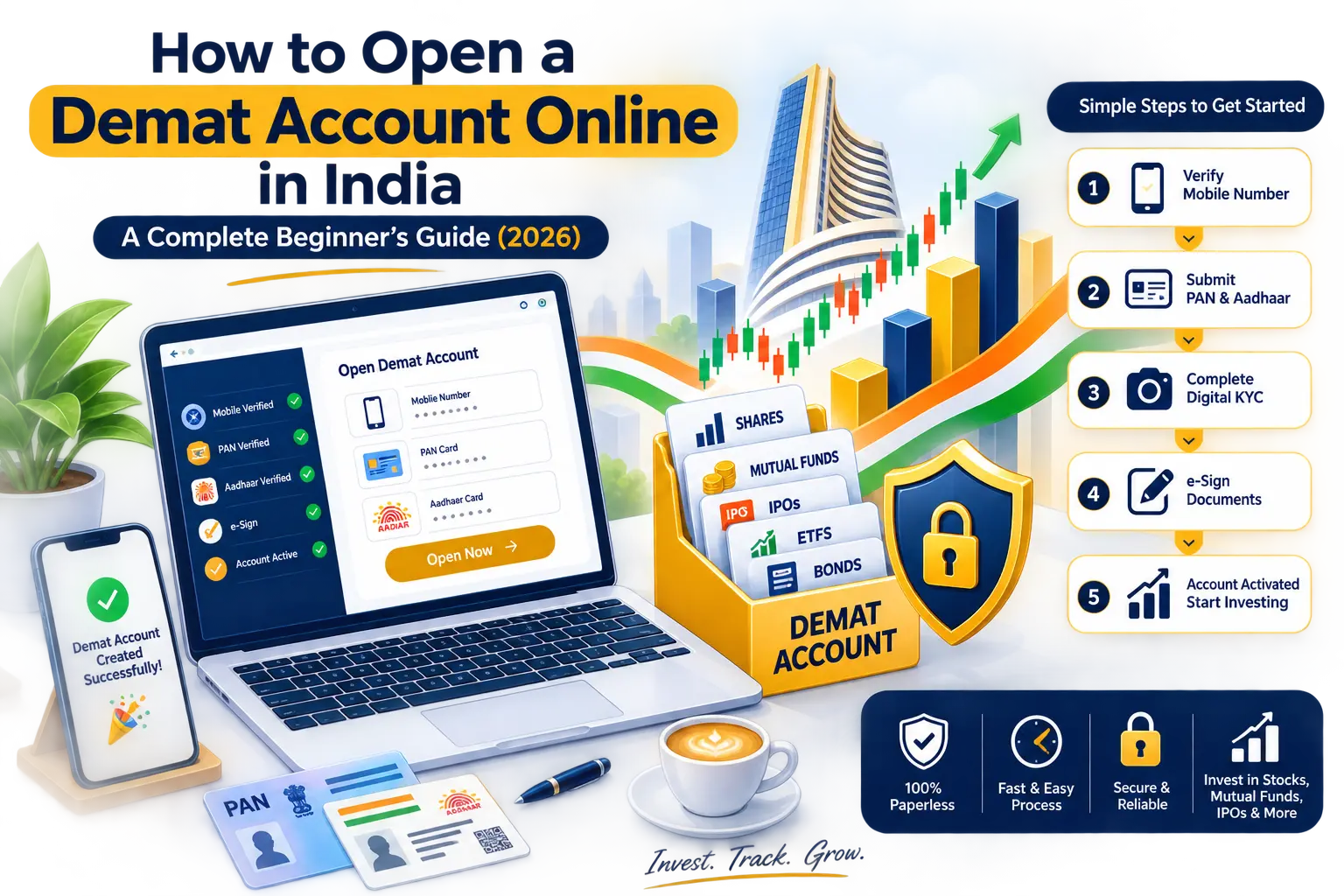
How to Open a Demat Account Online in India: A Complete Beginner's Guide (2026)
- Demat Account
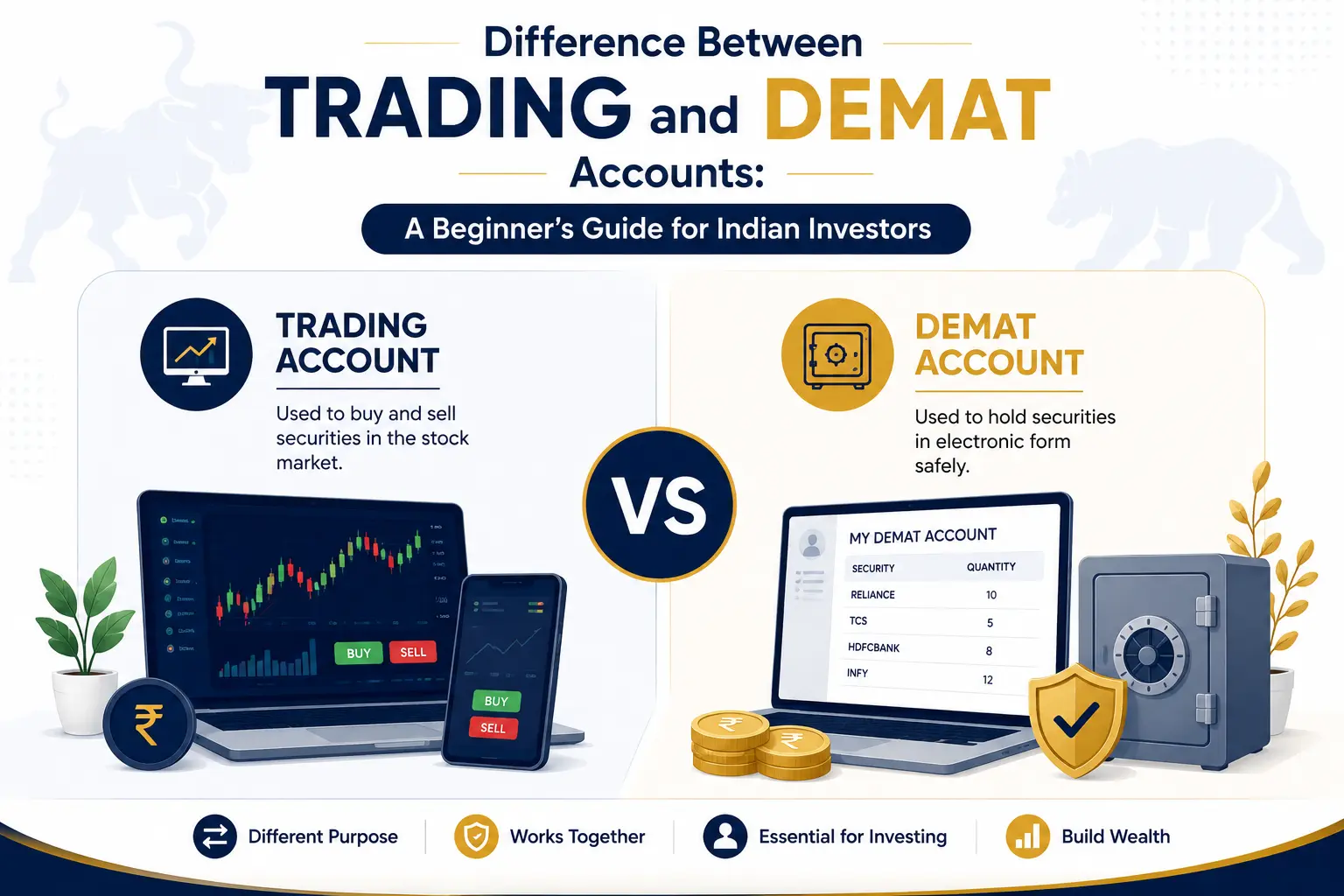
Difference Between Trading and Demat Accounts: A Beginner's Guide for Indian Investors
- Investor Education
REIT vs InvIT: What's the Difference? A Simple Guide for Indian Investors

Was this article helpful?
🚀 Open your Demat & Trading account
- Free Account opening charges
- Free DP transaction charges ⭐
- Free premium research & market updates