
REIT vs InvIT: What's the Difference? A Simple Guide for Indian Investors
Learn the differences between REITs and InvITs, and how they work for Indian investors. Get to know structure, income, risks, taxation, and where they fit. A simple guide for comparing REITs and InvITs before investing. As you can see, the input and output have approximately the same amount of words.
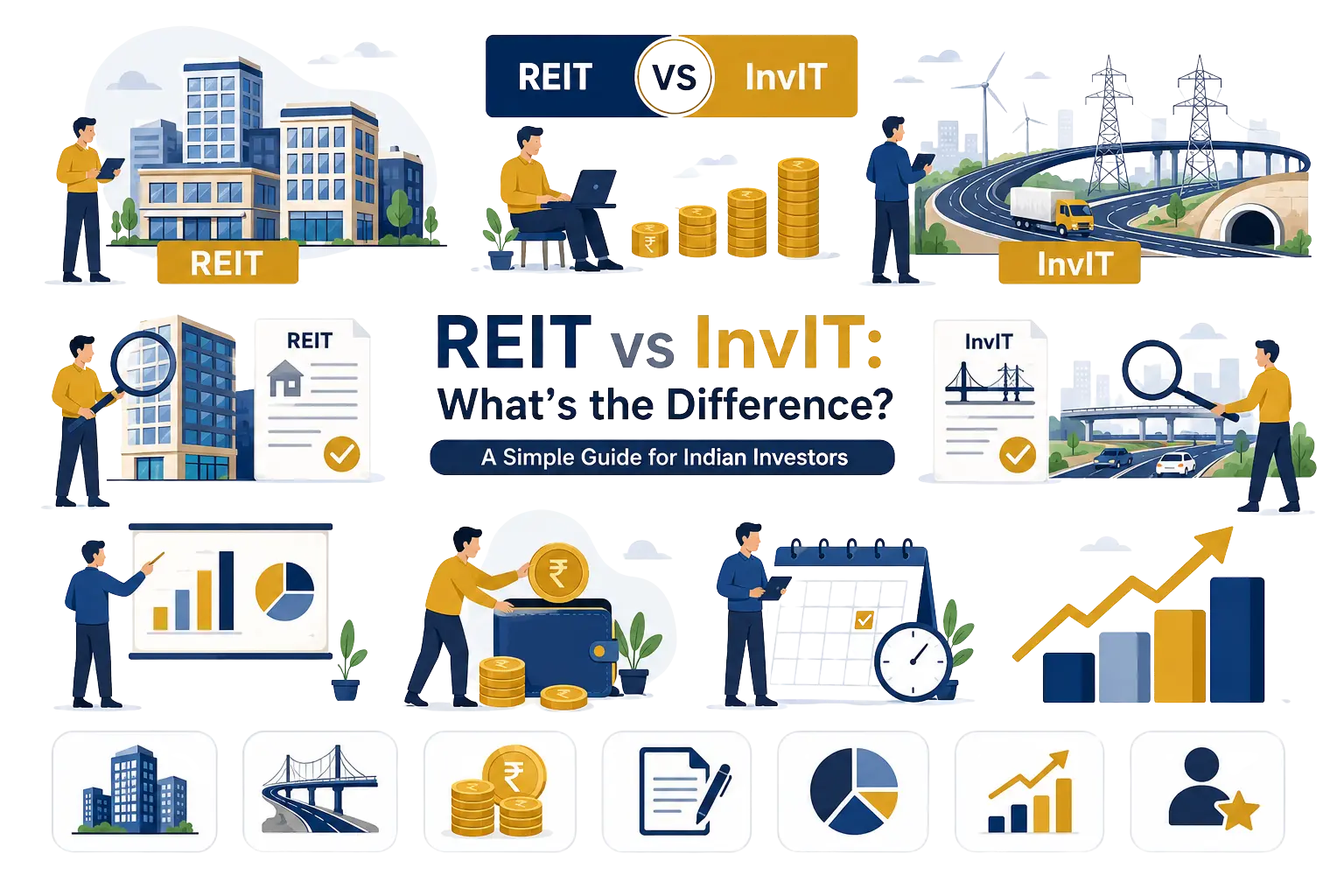
REIT vs InvIT: comparing real estate and infrastructure investment trusts in India
Summary: An accessible guide on REITs vs InvITs in India for initial investors exploring the difference between REITs and InvITs. It covers the characteristics of underlying assets, sources of income, distribution requirements, risks, taxes, and investing.
Key Takeaways
- REITs invest in real estate, and InvITs invest in infrastructure (think roads, power lines).
- SEBI regulates both, and both are listed on an exchange and generally must distribute 90% of their net distributable cash flows to unitholders.
- Returns can come from regular distributions, capital appreciation, and return of capital — but neither instrument guarantees returns like a fixed deposit.
- Key risks include interest rate sensitivity, occupancy or traffic-demand risk, concentration risk, and no capital protection.
- You need a Demat and trading account to buy REIT or InvIT units, which trade on NSE and BSE like shares.
- Tax treatment of distributions and capital gains can change; always verify current rates before investing.
If you are seeking opportunities beyond stock, mutual funds, and fixed deposits, you have likely encountered two newly created options called REITs and InvITs. Both REITs and InvITs are registered with SEBI, are listed on an exchange, andew distribute most of their cash to investors. Although they share some similarities, they differ on the assets they hold, and therefore, should be assessed independently. The following guide is a quick primer on how to evaluate these investments in a simplified Indian market context.
What Is a REIT?
A Real Estate Investment Trust (REIT) is a trust, which is regulated by SEBI and holds a portfolio of large, leased, and income-generating commercial real estate such as IT business parks, large office spaces, and shopping complexes. If you were to buy a REIT, you are buying a unit of a trust that owns and manages a portfolio of such real estate. As a unit-holder, you will receive a portion of rental income and have the potential to realize upside on the capital from an appreciation in the value of the property. In India, REITs are properly classified and governed as a SEBI Regulation of 2014. Their units are listed along with equity shares in the NSE and BSE and are some of the first offerings of listed REITs in India like Embassy Office Parks REIT, Mindspace Business Parks REIT, Brookfield India Real Estate Trust, etc. which are expected to grow in the future.
What Are InvITs?
In Infrastructure Investment Trusts (InvITs), pooled trusts are used to invest in infrastructure rather than real property. Examples include toll roads, power transmission lines, gas pipelines, and telecom towers, to mention a few. InvITs, through tolls or regulated tariffs, or long-term contracts, earn their revenue. The distributions to investors are principally from the revenue. Currently, InvITs that are traded in India, include: India Grid Trust (IndiGrid), PowerGrid Infrastructure InvIT, IRB Infrastructure Trust, and National Highways Infra Trust, to name a few. The list changes as new InvITs trade or older InvITs restructure.
REIT vs InvIT: Key Differences
Underlying assets: REITs purchase commercial real estate such as malls or office buildings. InvITs purchase infrastructure assets including roads, electricity transmission lines, pipelines, or mobile phone towers.
Income Stream: Rental income and leases comprise most REIT income. InvIT income is from tolls, regulated tariffs, and annuities or contract payments.
Distribution Requirements: Both are usually required by SEBI to distribute 90% of net cash flows to unit holders, subject to current regulations.
Regulatory Classification: Until recently, SEBI has regarded both REITs and InvITs as hybrid instruments when compared to pure equity. Some recent sector reports indicate SEBI is inclined to reclassify certain listed REITs to equity-like treatments for certain conditions (mutual fund exposure, for example) starting January 2026. In the absence of recent authoritative SEBI directives, this classification is subject to change.
Stability of Assets: Infrastructure assets, such as a power line, tend to have constant or regulated income streams, whereas income from commercial real estate tends to be more variable with reactive pricing to market conditions.
Length of Assets: An infrastructure concession (for example, a toll road), may have an agreement to end the concession. In contrast, real estate does not have a terminal date, yet buildings do need continuous maintenance and periodic large capital outlays.
How Do You Earn Returns from REITs and InvITs?
Investments in both REITs and InvITs may generate returns in three separate ways:
Regular distributions: typically made quarterly, this consists of rental/toll/tariff income; interest income; and in some cases, a return of capital. The specific combination varies by trust and is communicated to investors.
Capital appreciation: demands and supply dynamics on the stock exchange can impact trading prices of units; in this way the unit price behaves similarly to a stock; a unit price of a REIT/InvIT may increase/decrease based on demand and supply, changes in market sentiments, movements in interest rates, and changes in occupancy and traffic.
Return of capital: Distributions that generally consist of return of invested capital - as opposed to income - make the tax structure and tax treatment of REIT/InvIT distributions more complicated as compared to a dividend.
Because unit prices can vary, REITs and InvITs operate more like listed equity securities rather than fixed income securities. They should not be used to replace fixed income securities with a guaranteed coupon, despite the regular cash flow payouts.
Risks to Consider Before Investing
Interest rate sensitivity: Increasing interest rates can negatively affect the profitability of trusts and make REIT/InvIT yields less favorable compared to other investments with more security. In the long run, this may cause unit price decline.
Occupancy and traffic/demand risk: The income for REITs derives from the renewal of leases and the overall occupancy level. Some InvITs, such as toll-road InvITs, are exposed to cyclical risks based on demand and traffic volumes.
Concentration risk: Some REITs and InvITs have significant holding in separate large single assets or projects. This means the returns can be significantly impacted based on the performance of specific assets.
No capital guarantee: A unit holder’s capital is not guaranteed by the investment. There is the possibility of unit price decline and the risk of variable distributions.
Liquidity risk: Although ownership of property and infrastructure is less liquid compared to REITs, trading the units of some InvITs and REITs may be as liquid as larger capital stocks.
Taxation of REITs and InvITs in India
REITs and InvITs distribution comprises interest income, dividend income, and a return of capital. Each of the three components is taxed individually. Generally, interest and dividend income are taxed at the applicable investor tax slab. Capital gains from the sale of units are taxed in accordance with the relevant holding period as short-term or long-term capital gains. Tax rates and tax thresholds for REIT/InvIT distributions and capital gains undergo changes from time to time. A reference to a specific tax rate should be regarded as illustrative only. You are required to check the current rates on the Income Tax India portal or engage the services of a tax professional prior to filing of the income tax return.
How to Invest in REITs and InvITs
REITs and InvITs are listed instruments and therefore can be purchased and sold like shares:
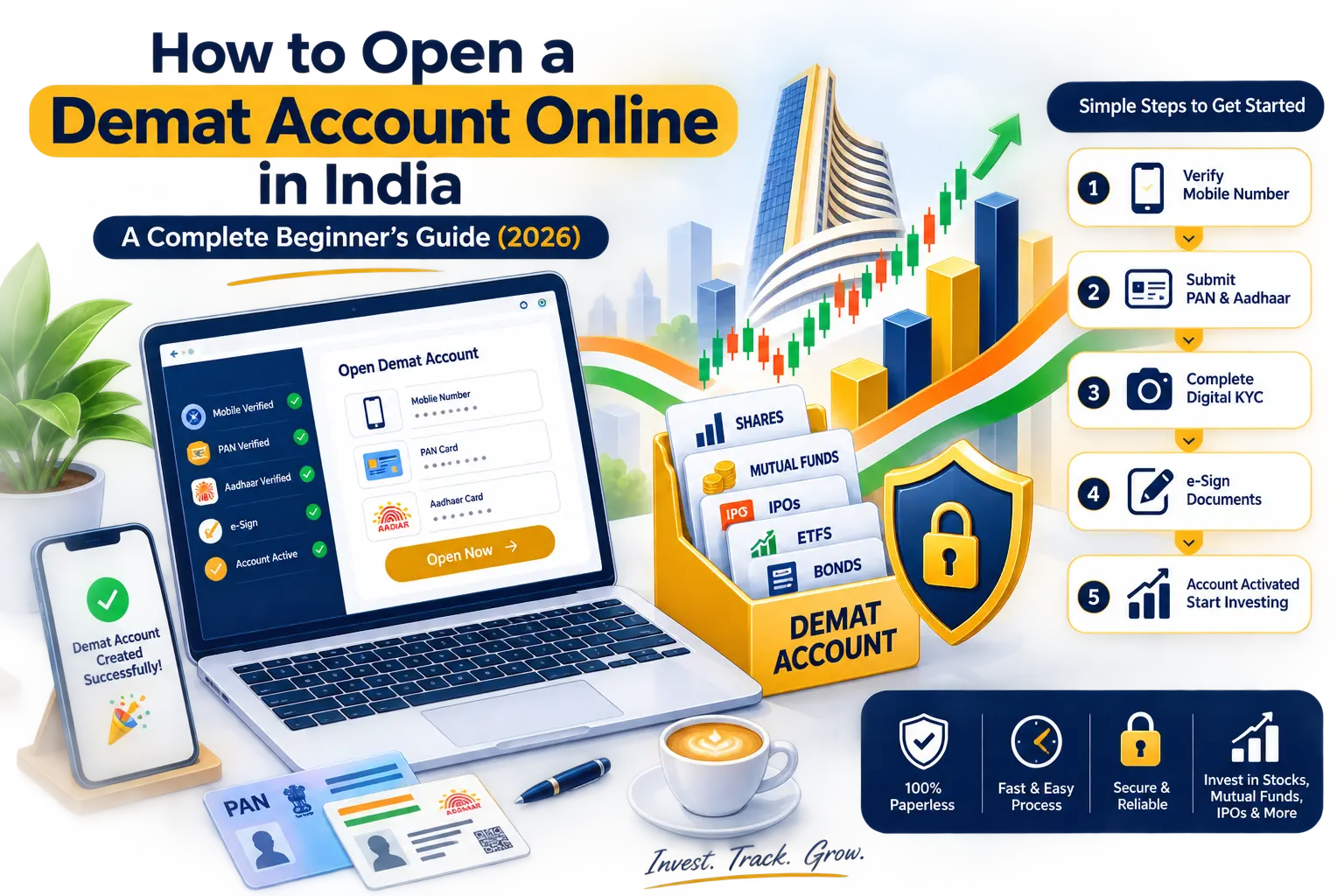
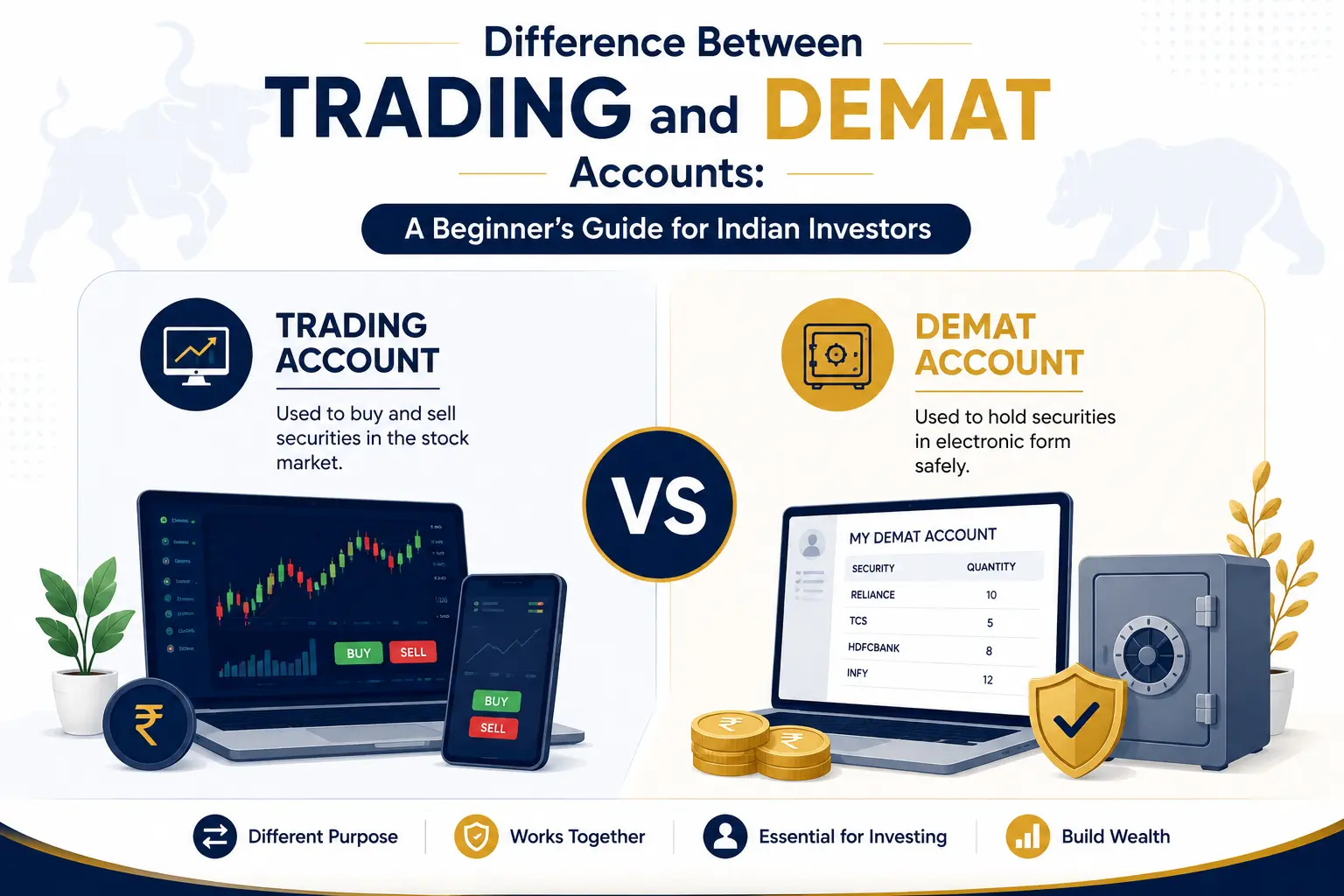
You need to have an active Demat account and trading account with a SEBI registered broker. Check our article on opening a Demat account online in India.
Once the above prerequisites are fulfilled, units of REITs and InvITs can be bought on the NSE or BSE like any other listed stock.
SEBI has progressively reduced minimum investment lot sizes thus REITs and InvITs have become accessible to small retail investors. Minimum lot requirements can change so please check the latest requirement prior to placing an order.
Some mutual fund schemes and index funds offer indirect exposure to REITs and InvITs (e.g. funds tracking a REITs and InvITs index). Such funds may be suitable for investors who prefer not to select individual trusts. You can find out more about regulated mutual funds on AMFI's website.
REIT vs InvIT: Which One Would Better Fit Your Needs?
Each instrument has its advantages and disadvantages over the other, depending on your goals and appetite for risk:
REITs are favorable to investors who want exposure to quality commercial real estate which offers a potential for both income and capital growth, and who are able to deal with market cycles associated with real estate.
InvITs are favorable to investors who prioritize stable cash flows, backed by contracts or tariffs, especially power transmission or annuity-style InvITs, however, InvITs, based on tolls, carry more variability.
Some investors, instead of favoring one over the other, choose to hold a combination of both along with some other traditional equity and debt, and mutual fund SIPs, as a part of their diversified portfolio.
Since these instruments are market linked, investors are advised to go through the trust’s latest offer document, view any presentations made by the trust, ascertain the assets of the trust, and ascertain how the trust will fit into their assets allocation, before making an investment.
Conclusion
REITs and InvITs differ primarily on the asset classes they represent: commercial real estate for REITs versus infrastructure projects for InvITs. However, they both offer similar structures regulated by SEBI and are exchange traded with high mandatory distribution. Though both have the potential to provide income and the opportunity for diversification over traditional equity, neither assures return on the investment and neither provides the capital protection associated with a fixed deposit. This article is purely for educational purposes. Before investing, please check other sources by SEBI and seek trusted financial advice.
Frequently Asked Questions
What is the basic difference between a REIT and an InvIT?+
A REIT invests in income-generating commercial real estate such as office parks and malls, earning mainly rental income. An InvIT invests in infrastructure assets like toll roads, power transmission lines and pipelines, earning mainly toll, tariff or annuity-style income.
Are REITs and InvITs safe investments?+
Both are regulated by SEBI and offer more transparency and liquidity than direct property or infrastructure ownership, but they are not risk-free. Unit prices can fluctuate, distributions can vary, and there is no capital guarantee, so they should be evaluated like other market-linked investments.
How much do REITs and InvITs need to distribute to investors?+
Under prevailing SEBI regulations, REITs and InvITs are generally required to distribute at least 90% of their net distributable cash flows to unitholders, subject to the specific rules applicable at the time, so always check the trust's latest disclosures.
Do I need a Demat account to invest in REITs or InvITs?+
Yes. Listed REIT and InvIT units trade on the NSE and BSE like shares, so you need an active Demat and trading account with a SEBI-registered broker to buy or sell them.
Are REIT and InvIT distributions taxable in India?+
Yes, distributions are generally a mix of interest, dividend and return-of-capital components, which can be taxed differently, while capital gains from selling units are taxed separately based on the holding period. Tax rates have changed periodically, so verify current rates with a tax professional or the Income Tax India portal before investing.
Which is better for beginners: REITs or InvITs?+
Neither is universally 'better' — REITs may suit investors interested in commercial real estate income and appreciation, while InvITs may suit those seeking infrastructure-backed cash flows. Many investors choose to diversify across both, alongside other asset classes, rather than picking just one.
Can mutual funds invest in REITs and InvITs?+
Yes, mutual funds in India can invest in REITs and InvITs within prescribed exposure limits set by SEBI, and some schemes or index funds specifically track REIT and InvIT indices, offering indirect exposure for investors who prefer not to pick individual units.
What is the minimum amount needed to invest in a REIT or InvIT?+
SEBI has progressively reduced minimum lot sizes for REITs and InvITs over the years, making them more accessible to retail investors. Since minimum lot sizes and unit prices vary by trust and can change, check the current requirement on the exchange or with your broker before investing.
Disclaimer
This article is for investor education only and does not constitute investment advice, a recommendation, or an offer to buy or sell any security.
Markets involve risk, including possible loss of capital. Please do your own due diligence or consult a registered adviser.
Research views are informational and may change without notice. Past performance is not indicative of future results.
This article is for educational purposes only and does not constitute personalised investment advice. REIT and InvIT regulations, distribution requirements, tax rates, and listed trusts may change over time; verify current details with SEBI, NSE, BSE, official trust offer documents, or a qualified financial/tax advisor before investing.
Ready to Explore REITs and InvITs?
Open a Demat account with a SEBI-registered broker to start exploring listed REIT and InvIT units alongside your other investments.
Open Demat AccountRelated Articles

Was this article helpful?
🚀 Open your Demat & Trading account
- Free Account opening charges
- Free DP transaction charges ⭐
- Free premium research & market updates