
How to Open a Demat Account for Gold and Silver ETFs
Learn how to open a Demat and trading account for Gold and Silver ETFs in India, from PAN and KYC to first orders, costs, holdings and risks.
Summary: To purchase exchange-listed Gold or Silver ETFs in India, investors require a bank account, an active trading account, and a Demat account. This document discusses account setup, KYC process, documents, placing ETF orders, fees and risks, and differentiating ETFs from FoFs and physical metals.
Key Takeaways
- A bank account, a trading account, and a Demat account are required for purchasing exchange-listed Gold and Silver ETFs.
- Certain Gold and Silver ETF Fund of Funds can be purchased without a Demat account.
- Make available your PAN, ID and address proofs, bank account details and the intermediary’s required KYC documents.
- Compare the brokers and ETFs expense ratios and the trading spreads and differences before making a purchase.
- An approved account provides access to the eligible products but does not assure profits or immediate activation.
You will typically need an active Demat account, trading account and linked bank account to buy Gold and Silver ETFs on any of the Stock Exchanges in India. This article explains how to open a Demat account for gold and silver ETFs, what documents to carry, what costs to expect and how to make your first ETF purchase. Unlike other articles that review different ETF schemes, this article focuses on making your accounts ready for ETF purchases.
Interested in Gold or Silver ETFs? If you do not have accounts yet, take advantage of the online Demat account opening and application assistance. Account approval and trading access will be determined by eligibility and completion of verification.
Do you need a Demat account for gold and silver investing?
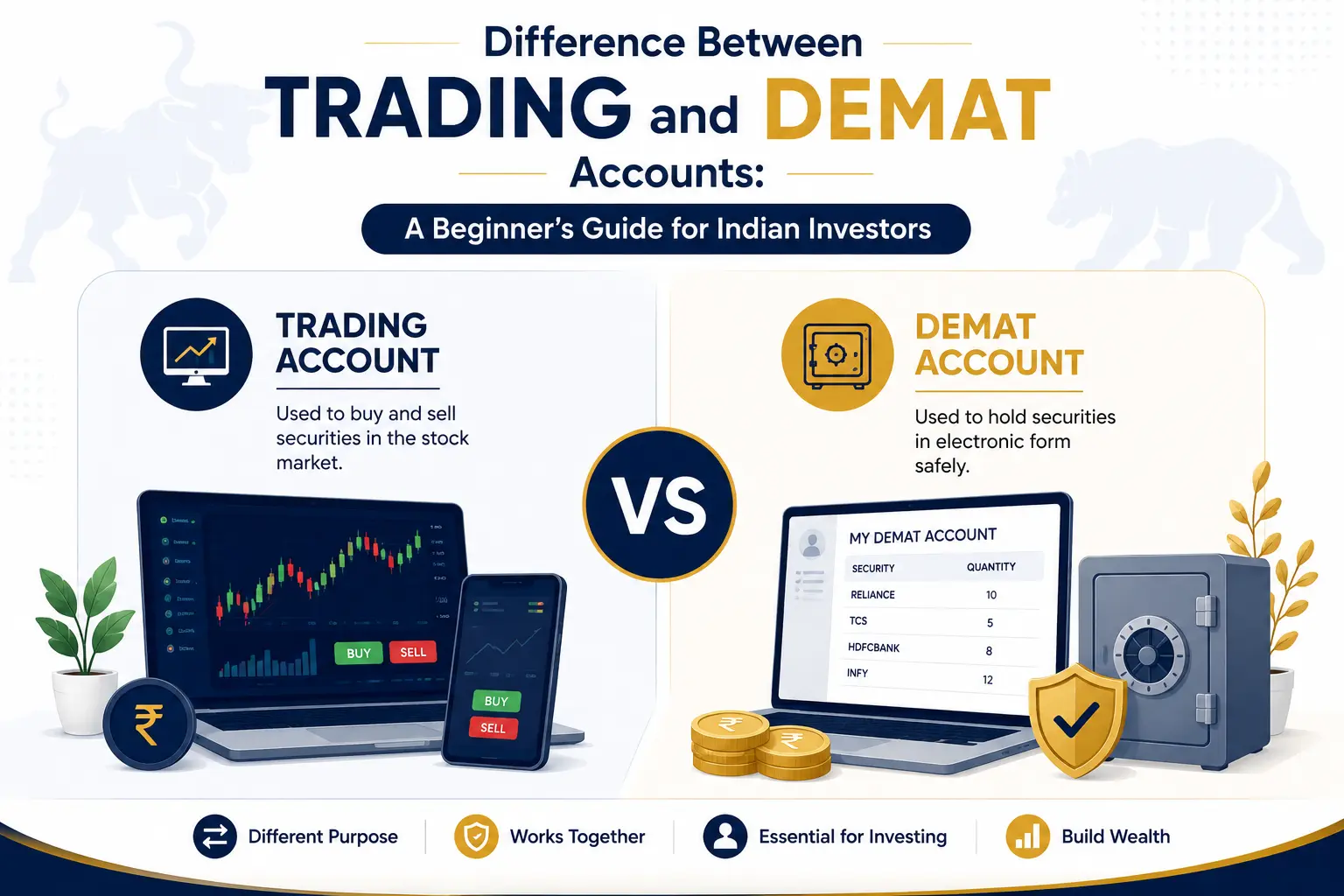
For exchange-listed Gold and Silver ETFs, yes. These are mutual fund units that are listed and traded on stock exchanges, typically via a stockbroker. A Demat account will hold the units after settlement, and a trading account and a bank account will facilitate the purchase or sale order. SEBI's investor resource and NISM's getting-ready guide support the above three roles.
However, a Demat account is not required for every way of investing in gold or silver. Buying physical jewellery or bullion is different from holding securities. Some Gold or Silver ETF Fund of Funds (FoFs) can be purchased as ordinary mutual fund units without a Demat account, depending on the investment platform and holding mode.
Investment route | Is a Demat account needed? | How it works |
|---|---|---|
Gold or Silver ETF on an exchange | Yes, with trading access | Buy and sell listed ETF units through a broker |
Gold or Silver ETF Fund of Funds | Not necessarily | Subscribe to a mutual fund scheme that invests in ETF units |
Physical gold or silver | No | Purchase and store the metal directly |
Commodity futures | Different trading permissions apply | Derivative contracts, not ETF ownership |
Documents to prepare before applying
Standard documents needed for a typical online application include your PAN, identity and address details, bank account, registered mobile number and email ID. Your intermediary may seek a valid address document, photograph, signature, bank proof or other information based on their verification procedure and your situation.
PAN and personal details: See that your names and dates of birth, etc., are correct and consistent.
Identity and address verification: Keep the accepted documents ready for KYC.
Bank details: Choose an account that meets the requirements and check verification conditions.
Mobile and email: See that both are accessible for OTPs and account-related communications.
Other declarations: See the nominee/opt-out choice, disclosure, brokers’ specific forms, etc.
Aadhaar-based verification or electronic signing may be available, but it may be different for each broker. Additional income proof may be required for certain trading segments, but do not take it as required only for delivery-based ETFs. For more on KYC background, refer to the online Demat account opening guide.
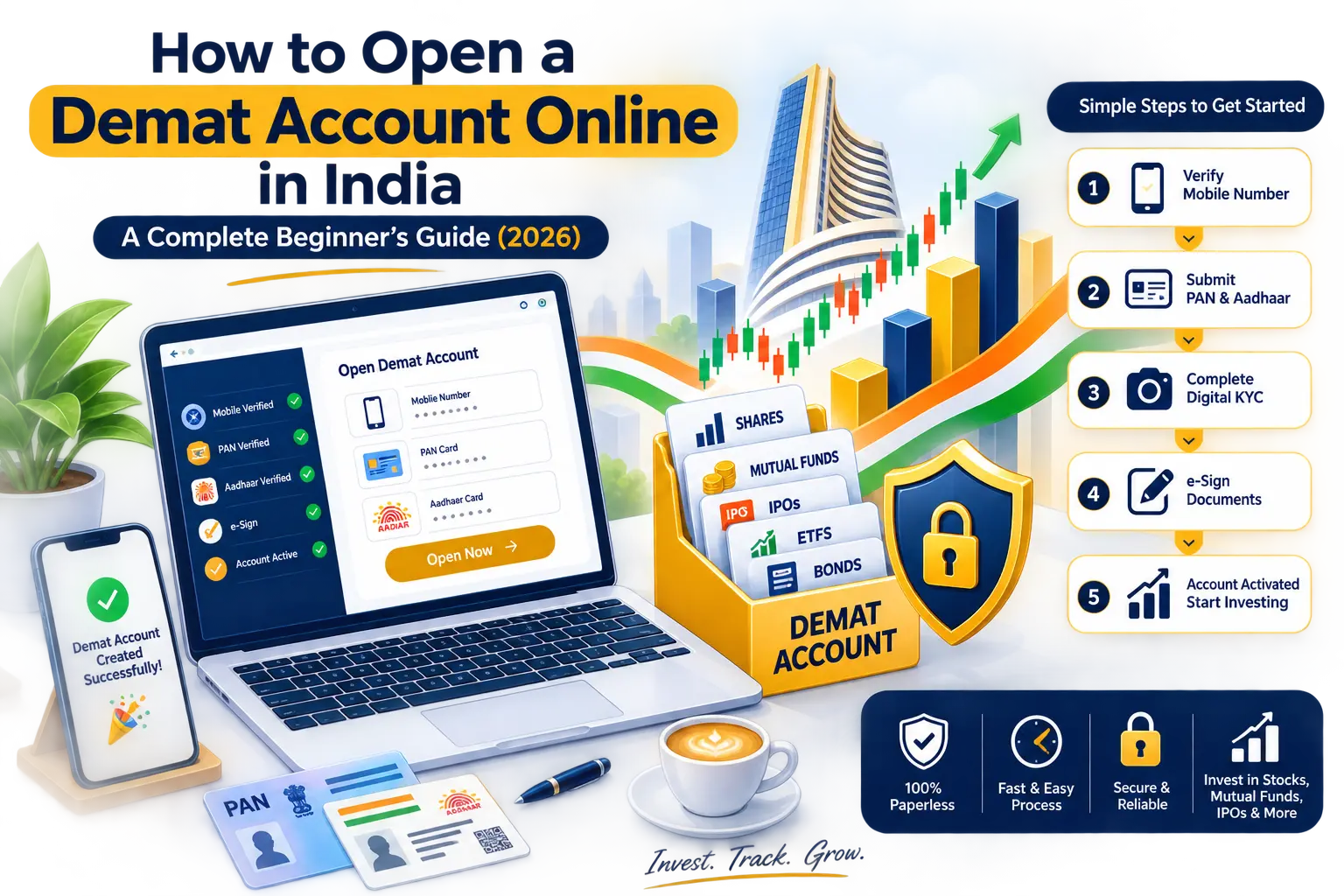
How to open a Demat account for Gold and Silver ETFs
Step 1: Choose a broker and review the account features
See if the broker provides facilities like access to NSE/BSE ETFs, placement of orders online, reporting of holdings and access to contract notes. Also review account opening charges, annual maintenance charges, brokerage, depository charges and customer support. If you have an active Demat and trading account with a broker who provides you with all the facilities mentioned above, you can go ahead and invest in precious metal ETFs.
Step 2: Start the application through an approved channel
Open the broker's official website or an approved application process to open an account. InvestEdge360, run by Vijayvargiya Financial Services Pvt. Ltd., which is an ABP of Motilal Oswal Financial Services Limited, provides an application process for opening a Demat account. This service is also available on the official website of Motilal Oswal. You can go through the Demat account opening process and see what the next steps are.
Step 3: Complete KYC and identity checks
Fill the form with your details and upload the documents required for verification. Before signing, ensure that you agree with the declaration. Do not share your passwords, OTPs, or account details with any person for verification. How long it takes to process your documents and verify your identity, and when your account gets activated, depends on the service provider.
Step 4: Link and verify your bank account
Link a qualifying bank account and complete the corresponding verification. A bank account is used to fund trades and receive payouts. Review your bank and trading account details and confirm their accuracy. Review the broker's fund transfer instructions. Never transfer trading funds to a personal account.
Step 5: Confirm that trading access is enabled
Equity cash-market or ETF trading has to be activated to complete this step. Log in to the broker’s trading platform and check if you are able to enter a trade for an exchange-listed ETF. Do not take the other side of the trade (i.e., if you want to buy the ETF, do not sell it). Delivery ETFs are different from commodity-related derivatives. Separate permissions may be required to trade commodity futures.
Step 6: Find the exact ETF you intend to research
Browse using the full name of the fund and/or the stock exchange it is listed on. Confirm you are selecting a Gold ETF or Silver ETF as opposed to an ETF FoF, a gold company stock or other gold-related derivatives. Review the Scheme Information Document, Key Information Memorandum and latest published fact sheet. Our ETF investment information may be useful to better understand the product category.
Step 7: Review the order and confirm the resulting holdings
Before placing an order, check the buy and sell quotes and the available quantity. Analyze the bid-ask spread and the order type. Check if you have sufficient funds to trade. After placing the order, check the order status and settle the trade. Adjust your holdings after the securities are transferred to your Demat account.
Example: What happens when you buy ETF units?
Let's say an ETF has a hypothetical ask price of ₹85 per unit. An order for 10 units would have an estimated trade value of ₹850 before brokerage, statutory levies and other costs. This is an illustrative example and not a real ETF price. The order could execute partially or not at all if the requested price is not available. After delivery and settlement, the units of the ETF are available in the Demat account.
Costs and risks to understand before investing
Account and transaction costs: These include account opening charges, annual maintenance charges (AMC), brokerage, exchange and statutory levies, and any charges levied by the depository. Separately, the ETF's expense ratio reduces the fund's performance and is not shown as a brokerage invoice. Current tariffs and offers may change.
ETF trading costs: Higher bid-ask spreads increase costs of trading. ETFs trade in thin volumes, and therefore may be hard to trade at desired prices. Compare quoted prices with the fund’s indicative or published NAV where available, as ETFs may trade at a premium or discount.
Underlying asset risk: Gold and silver prices may fall. Silver price is additionally influenced by industrial demand. Both may be affected by global demand, currency and other market factors. Tracking difference means fund performance may not match the price of the underlying asset. For more information, refer NISM’s Gold and Silver ETFs report.
Neither owning physical gold/silver ETFs nor owning physical gold/silver means one may collect physical bars from one’s Demat account. Normally, retail investors hold units of the fund. The terms and conditions of a scheme govern creation/redemption in physical metal.
Common account-opening mistakes to avoid
Assuming you need a Demat account for gold/silver products without examining if a product is an ETF or Fund of Funds (FoF) or if it is a physical purchase.
Selecting an account based on the introductory offer without checking the annual and transaction costs.
Submitting incorrect KYC or Bank documents and trusting a promised activation.
Mistaking a Gold/Silver ETF for commodity futures or a metal trading app.
Purchasing without checking the ETF symbol, spread, and liquidity, and understanding the expenses and scheme documents.
Conclusion
If your objective is to buy listed gold and silver ETFs, you would need to first complete the correct bank, trading and demat accounts, KYC, check trading access and research the ETF you wish to trade. For more details on the steps involved, please see guides on Gold ETF buying or Silver ETF. Opening the account gives you access to these products. It does not make any investment decision for you and does not guarantee a return on investment.
Frequently Asked Questions
Is a Demat account mandatory for Gold and Silver ETFs in India?+
For buying and holding exchange-listed Gold or Silver ETF units through the stock exchange, investors generally need a Demat account, a trading account and a linked bank account. This differs from buying physical metal or certain ETF Fund of Funds.
Can I invest in gold or silver without opening a Demat account?+
Yes. Physical gold or silver purchases do not require a Demat account. Certain Gold or Silver ETF Fund of Funds may also be bought as ordinary mutual fund units without a Demat account, depending on the platform and holding mode.
What documents are needed to open a Demat account for ETF investing?+
An individual applicant typically needs PAN, accepted identity and address information, bank details and contact information, plus any photo, signature or other verification requested by the intermediary. Exact requirements vary by applicant and broker.
Do I need a commodity trading account to buy Gold or Silver ETFs?+
No separate commodity-derivatives permission is ordinarily required solely to buy eligible exchange-listed Gold or Silver ETF units in the equity cash market. Commodity futures and other derivatives are different products with separate requirements.
Can I buy a Gold or Silver ETF immediately after applying for a Demat account?+
Not necessarily. Your account must be successfully verified and activated, with relevant trading access and usable funds, before orders can be placed. No fixed approval timeline should be assumed.
What charges apply when buying Gold and Silver ETFs?+
Check the broker's account-opening and annual maintenance fees, brokerage, applicable statutory and exchange charges, and any depository charges. Also assess the ETF's expense ratio and trading spread; actual costs depend on the broker and fund.
Are Gold and Silver ETFs guaranteed to match metal prices or make a profit?+
No. Both metal prices and ETF market prices can fall. Expenses, liquidity, premiums or discounts to NAV and tracking differences can cause ETF performance to diverge from changes in the underlying metal price.
Disclaimer
For educational purposes only; not personalised investment advice or a recommendation to buy a particular fund. Securities and precious-metal prices can fluctuate, and returns are not guaranteed. Check the latest scheme documents, intermediary requirements and applicable charges. InvestEdge360 is operated by Vijayvargiya Financial Services, an Authorized Business Partner of Motilal Oswal Financial Services Ltd. This is not the official Motilal Oswal website.
Research Team
InvestEdge360 Research
Content Research Desk
Insights from InvestEdge360's research desk — written to help investors learn with clarity and invest with discipline.
Ready to Explore Gold and Silver ETFs?
Learn how to open a Demat and trading account for eligible exchange-listed ETFs, with application assistance through InvestEdge360, an Authorized Business Partner of Motilal Oswal Financial Services Ltd. Verification and charges apply.
Open Demat AccountRelated Articles

Was this article helpful?
🚀 Open your Demat & Trading account
- Free Account opening charges
- Free DP transaction charges ⭐
- Free premium research & market updates