
SLBM Charges in India: What Costs Should Investors Know?
Understand SLBM charges in India, including lending fees, brokerage, intermediary costs, GST, statutory levies and their impact on net lending income.
Summary: A practical guide to SLBM charges in India covering lending fees, brokerage or processing charges, GST, DP charges, statutory levies, margins and the calculation of net lending income.
Key Takeaways
- Lending fees for SLBMs vary for each security and are based on market demand and contract terms.
- The gross lending fee is the fee received by the lender, but it is usually not the final net income.
- There can be big differences in transaction fees for intermediaries.
- GST can apply to taxable securities lending services and intermediary services, based on the relevant laws.
- DP, exchange, clearing costs, regulatory fees, and other statutory charges, should be verified separately.
- Margin is different from transaction expenses. Margin can affect available capital or securities.
To lend shares using the Securities Lending and Borrowing Mechanism (SLBM) in India, one must have a basic understanding of SLBM charges. The lending fee quoted in SLBM transactions does not indicate the amount that the lender receives. The net amount that the lender receives is subject to the transaction and intermediary related charges, brokerage, processing, GST, depository and other applicable charges.
For investors, SLBM provides the opportunity to generate an additional income flow by lending securities at a fee. However, such an opportunity may require the investor to hold the securities for an undefined period. Furthermore, such investment would attract costs, taxes and the securities may remain unavailable for sale during the period they are lent.
This report focuses on the key SLBM charges in India, what borrowers and lenders need to review, a simple example of net income calculation and explains the key differences between the charges of different intermediaries.
What Is SLBM?
Securities Lending and Borrowing (SLB or SLBM, for short) is a regulated service provided by an approved intermediary and an exchange/ clearing corporation mechanism through which securities can be temporarily lent and borrowed. The borrower is obligated to return the same securities of the same type and class, in accordance with the applicable settlement terms.
Regarding the trading, clearing and settlement services, SEBI framework relies on the clearing corporations. The framework also establishes that fees and charges related to lending should be defined through appropriate agreements and arrangements with the intermediaries. You can find the detailed version of the SEBI Securities Lending Scheme here.
For lenders, the primary economic benefit is the lending fee. Lenders set or take market determined lending fee, and borrowers pay the fee and provide the required margins and collateral as per the SLBM framework.
Why Do SLBM Charges Matter?
You may think that a higher quoted lending fee will yield a profitable transaction for a lender, but that is not entirely accurate.
The quoted lending fee, in isolation, fails to capture a lender’s effective net income.
For example, if an investor lent 1,000 shares at a lending fee of ₹4 per share, then the gross lending fee would be:
1,000 shares × ₹4 = ₹4,000 gross lending fee
If the intermediary charges a processing or brokerage fee calculated as a percentage of the lending fee, and GST is applicable to that service charge, then the amount credited to the lender will be less than ₹4,000. Other applicable depository or transaction charges will also have an adverse effect on the economics.
It is therefore important to look at net lending income and not just quoted SLBM lending rates.
SLBM Charges in India: Main Costs to Understand
There is no uniform retail SLBM charge applicable to every investor. The total cost will depend on the exchange mechanism, the participant or broker, the account structure, and the transaction and statutory framework applicable. Some of the key elements to look at are explained below.
1. Lending Fee
The lending fee is the most significant element in an SLBM transaction. This is normally quoted on a per share basis and is dependent on the demand and supply for the security and contract.
For example, if the lending fee is ₹3 per share and 2,000 shares are lent, then the gross lending fee is ₹6,000 before charges and taxes are applicable.
The fees for lending stocks and contracts vary based on market factors and investor demand. A stock lent that is in high demand by market borrowers commands a higher lending fee compared to a stock that has a low borrowing demand.
NSE states that the lending fee for securities is determined by the market and adds an exchange based SLBS facility for eligible securities. More information on the NSE Securities Lending and Borrowing can be found on the current framework.
2. Brokerage or Processing Charges
The intermediary sets brokerage or processing charges for SLBM services. Such charges may be a percentage of the loan or credit fee, a transaction fee, or another permitted fee.
Brokerage cannot be charged at a specific percentage across all brokers in India. For instance, a processing fee which is expressed as a percentage of the lending fee may be publishing by one intermediary, while another intermediary may have different charges.
Investors need to review the current tariffs or the SLBM pricing for each intermediary to understand how the charges are calculated (i.e. on the gross lending fee, transaction value, etc.).
3. GST on Applicable Services and Fees
GST is applicable on taxable services on securities lending and intermediary services or charges. The tax authorities have addressed the securities lending services.
In relation to the securities lending scheme, the CBIC 119/38/2019-GST states that the lending of securities is a service which is subject to GST, while the intermediary services incurring a commission or a charge are also taxable services. The exact implications of the reverse charge would depend on the nature of the transaction.
For a retail investor, the quote lending fee is not the fee after GST is added. Check the contract note, tax invoice, or intermediary's current SLBM charge schedule to find out which GST component applies to your transaction.
The official CBIC GST circular on securities lending provides the relevant tax clarification.
4. Depository Participant Charges
Given the dematerialized nature of SLBM, depository participants may charge for services related to debit, credit or settlement.
Broker and depository participant charges may differ. Some brokers have indicated the specific depository participant charges for SLBM settlement. In such cases, it is likely that other brokers have different arrangements.
Investors should verify if DP charges apply to the lender, borrower or settlement, and if the DP service attracts GST.
5. Exchange, Clearing and Regulatory Levies
Costs related to a transaction, both clearing and regulatory levies, may be a part of the overall cost of a transaction.
The transaction cost, and therefore the charge, may differ based on the transaction and the tariff of the exchange as well as the intermediary. For specific SLBM transactions, investors should refer to the statement or the contract note for the charge.
Secuities lending is a separate market and has an independent settlement and fee structure from equity delivery and trading, and therefore should not be treated in the same manner.
6. Statutory Taxes and Duties
Investors must review applicable statutory taxes and duties for the SLBM transaction. Certain charges like stamp duty, exchange levy, regulator fees, and other statutory charges, are determined by the transaction and the applicable laws.
For market charge information, NSE provides a current reference for SEBI turnover fees, STT and other levies. Investors must not assume that all levies appearing on the general equity market charge page are applicable to SLBM transactions. The current contract note and intermediary schedule must be referred to in order to ascertain the applicable charges.
Are SLBM Charges the Same for Lenders and Borrowers?
No. The economics of the lender and borrower are different.
Cost or Amount | Lender | Borrower |
|---|---|---|
Lending fee | Receives the gross lending fee before applicable deductions | Pays the agreed lending fee |
Brokerage or processing | May be charged according to intermediary terms | May be charged according to intermediary terms |
GST on applicable services | May apply to taxable services or charges | May apply according to the applicable tax mechanism |
DP charges | May apply to applicable securities movement or settlement | May apply depending on the intermediary and settlement arrangement |
Margins | May be applicable under the clearing framework until securities are delivered, depending on settlement arrangements | Margin requirements apply under the SLBM clearing framework |
The table is a conceptual guide, not a universal tariff. Current broker, clearing corporation and statutory rules should always be checked before a transaction.
How to Determine Net SLBM Income
An SLBM opportunity can be assessed by starting with the gross lending fee and subtracting associated costs.
Net SLBM Income = Gross Lending Fee − Applicable Brokerage or Processing Charges − Applicable Taxes on Services − Applicable DP and Other Charges
Suppose an investor lends 2,000 shares at ₹5 per share.
Gross lending fee = 2,000 × ₹5 = ₹10,000
For illustration, if an intermediary levies a 15% processing fee on the lending fee = ₹1,500
GST on that processing fee at 18% = ₹270
Other applicable charges = assumed ₹100 for illustration only
The net SLBM income = ₹10,000 - ₹1,500 - ₹270 - ₹100 = ₹8,130
The above is a hypothetical example, and the 15% processing fee and ₹100 other-charge assumption aren’t applicable SLBM charges. Actual charges vary and should be verified before use.
There is an important principle to remember, a ₹5 lending fee does not necessarily mean an investor’s net income will be ₹5 per share of the security lent.
Does a Higher Lending Fee Always Mean Better Returns?
Not always, a higher lending fee will yield a greater gross income, but the contract duration, demand for the security, liquidity and the requirement of the shares, associated charges, and the inability to sell shares during the lending period should be taken into consideration.
An example of this is the fee for strong borrowing demand security. The investor may be looking at a higher fee. An interested investor may find it challenging to sell the shares while the securities are on loan. The investor may sell the shares only after the securities are returned or an applicable early recall mechanism has been completed.
The temporary illiquidity disclosure made by SEBI is an example of a securities lending risk. It illustrates the risk associated with the possibility that shares lent out may not be available for sale until they are returned or recalled through the applicable mechanism.
What About Early Recall Charges?
SLBM has early recall and early repayment mechanisms and frameworks. Investors will have to check if they believe early recall will not have any costs associated with it or if they will not have to worry about a change in the economics of a loan.
According to NSE’s SLBS framework, early recall and early repayment will happen at a market determined cost. Hence, the proper treatment and any intermediary costs must be checked before a recall is initiated.
When considering potential selling needs, this could be more important than any increased lending potential.
What Happens to Dividends and Other Corporate Benefits?
Lending shares doesn’t necessarily mean giving up all potential benefits associated with the securities. In the SLBM framework, corporate actions are dealt with through certain mechanisms.
For instance, under the applicable settlement procedure, dividends are calculated and recovered from the borrower and are then owed to the lender. A stock split would lead to an adjustment in the borrowed position, and certain other corporate actions may lead to an early exercise or other treatment, as per the contract and exchange rules.
Investors should refer to the current SLBM terms as the treatment of corporate actions may be different based on the event and the contract series.
Do You Pay Brokerage When Lending Shares?
It depends on the broker. There are brokers who charge a percentage of the lending fee as brokerage, while others use different pricing methods.
This is often one of the first things that need to be checked when you compare SLBM opportunities across brokers. A lower headline lending rate with a lower intermediary fee can have a different net economy compared to a higher headline lending rate with a higher processing fee.
For a practical comparison, ask the broker for the complete cost structure rather than only asking, "What is the SLBM lending rate?"
SLBM Charges vs Normal Equity Trading Charges
Feature | Normal Equity Trade | SLBM |
|---|---|---|
Primary purpose | Buying or selling securities | Temporarily lending or borrowing securities |
Price or fee | Share market price | Market-determined lending fee per share |
Settlement | Equity settlement framework | Separate SLBM lending and borrowing settlement framework |
Income for lender | Potential capital gain or dividend-related income | Lending fee plus applicable corporate benefits |
Charges | Brokerage, taxes, exchange and statutory charges as applicable | Lending-related charges, intermediary fees and applicable statutory or depository charges |
Because SLBM has a separate market structure, investors should use the broker's dedicated SLBM tariff rather than assuming the charges for ordinary delivery trading apply in exactly the same way.
What Should Investors Verify Before Extending Shares on a Cash Lending Basis?
Gross lending fee: Confirm the lending fee for a share and the total quantity being lent.
Brokerage or processing fee: Determine whether the intermediary will charge a percentage or a flat rate, etc
GST: Confirm which components of the service are subject to GST and how it is charged.
DP charges: Determine whether a movement of securities will involve a charge imposed by a depository participant.
Other statutory charges: Determine the exchange, clearing, regulatory charges and applicable taxes/duties.
Contract tenure: Determine the expected date of return of the securities.
Early recall: Determine the pricing and any related charges.
Corporate actions: Determine how dividends, splits, bonuses, etc. will be treated.
Liquidity: Consider whether you may need to sell the shares during the lending period.
Contract note: After execution, review the actual charges rather than relying only on an advertised rate.
How Can Investors Determine Current SLBM Charges?
There is no single broker-independent retail fee card covering every possible SLBM cost. The most reliable approach is to combine the exchange and regulatory framework with the intermediary's current pricing document.
Check the current NSE SLBS information for exchange-level features, settlement and margin information.
Check the relevant SEBI framework for regulatory requirements.
Check your broker or participant's current SLBM tariff for brokerage, processing and DP charges.
Review the contract note and ledger after execution to verify the actual deductions.
SLBS margin information published by NSE also indicates the margin requirements for lenders and borrowers. These margins should not be treated as a normal charge: a margin requirement is not the same as a brokerage or fee, though it can impact the amount of capital or securities that is tied up in the transaction.
SLBM Charges and Taxes: Why Investors Should Keep Records
Investors should maintain records of lending transactions, contract notes, lending statements, and tax-related documents. The tax implications of securities lending will depend on the investor’s circumstances and relevant provisions under the income tax law. Investors should not expect that lending income will always be taxed as capital gains earned on the sale of shares.
Where the amount is material, investors should consult a qualified tax professional and check the Income Tax Department’s latest provisions. This article does not provide tax advice.
Common Mistakes When Looking at SLBM Charges
Focusing only on Lending Fees
The lending fee is only the beginning. You may have to pay processing fees, brokerage, GST, DP, and other charges.
Thinking that each broker charges a similar percentage
SLBM pricing is different amongst different participants. Check the current tariff of the broker or participant you actually use.
Thinking that margins and charges are equal
Margins are volatility control measures; they do not represent an amount or securities charged as a fee.
Ignoring liquidity
The stock you lent may be sold, and you may not be able to sell the stock when you need to. You should consider this along with the additional lending income.
Using outdated charge information
Packages and broker tariffs may have changed since you found the charge information. An outdated fee in an article or post may not apply.
Conclusion
Knowledge of SLBM charges in India is important to analyze if lending shares is worth it from an economic viewpoint. The headline lending fee may look attractive, however the amount the investor will ultimately receive will depend on the intermediary fees, GST, DP charges, and other transaction and statutory fees.
The best option is to compute the net expected lending fee before placing an order and then compare it to the liquidity cost and other risks of lending the securities on a temporary basis. Investors must also use current broker and exchange documentation since the operational arrangements and SLBM charges in India may change over time.
For investors building their knowledge of securities accounts and market infrastructure, the InvestEdge360 guide on how SLBM works in India describes an additional background. In addition, learn what a Demat account is and understand stock market basics before utilizing securities lending.
Frequently Asked Questions
What are SLBM charges in India?+
SLBM charges can include lending fees, brokerage or processing charges, GST on applicable services, DP charges and other exchange, clearing, regulatory or statutory amounts.
Is the SLBM lending fee fixed?+
No. The lending fee is generally market-determined and can vary by security, contract period and borrowing demand.
Does the lender receive the full SLBM lending fee?+
Not necessarily. Applicable brokerage, processing charges, GST, DP charges and other costs can reduce the gross lending fee.
Is GST applicable to securities lending?+
GST applies to securities-lending and related intermediary services under the applicable tax framework. The precise collection mechanism depends on the nature of the supply and applicable provisions.
Do all brokers charge the same SLBM brokerage?+
No. Brokers and SLBM participants can have different pricing structures, so investors should check the current tariff applicable to their account.
Are SLBM margins the same as SLBM charges?+
No. Margins are risk-management requirements that can temporarily block funds or securities, whereas brokerage and processing fees are transaction expenses.
Can I sell shares while they are lent through SLBM?+
Lent securities generally need to be returned or recalled through the applicable mechanism before they can be freely used for another transaction. Recall timing and economics should be checked beforehand.
How can I calculate my net SLBM income?+
Multiply the number of shares by the lending fee per share, then subtract applicable brokerage or processing fees, GST on taxable services and other relevant charges.
Disclaimer
This article is for investor education only and does not constitute investment advice, a recommendation, or an offer to buy or sell any security.
Markets involve risk, including possible loss of capital. Please do your own due diligence or consult a registered adviser.
Research views are informational and may change without notice. Past performance is not indicative of future results.
This article is for educational purposes. Do not take advice for investing, taxes, or financial matters from this article. SLBM charges, broker fees, legal fees, GST, and how currency exchange rates are handled may all change. Investors should double check the latest charges with their broker/intermediary, and official regulatory or exchange sources, before they trade.
Research Team
InvestEdge360 Research
Content Research Desk
Insights from InvestEdge360's research desk — written to help investors learn with clarity and invest with discipline.
Understand Your Demat and Market Access
Before using securities-lending facilities, understand the account infrastructure, applicable charges and risks involved in market transactions.
Open Demat AccountRelated Articles
- Investor Education
SLBM Explained: How Stock Lending and Borrowing Works in India
- Stock Market
How to Value a Stock in India: A Beginner's Guide
- Demat Account
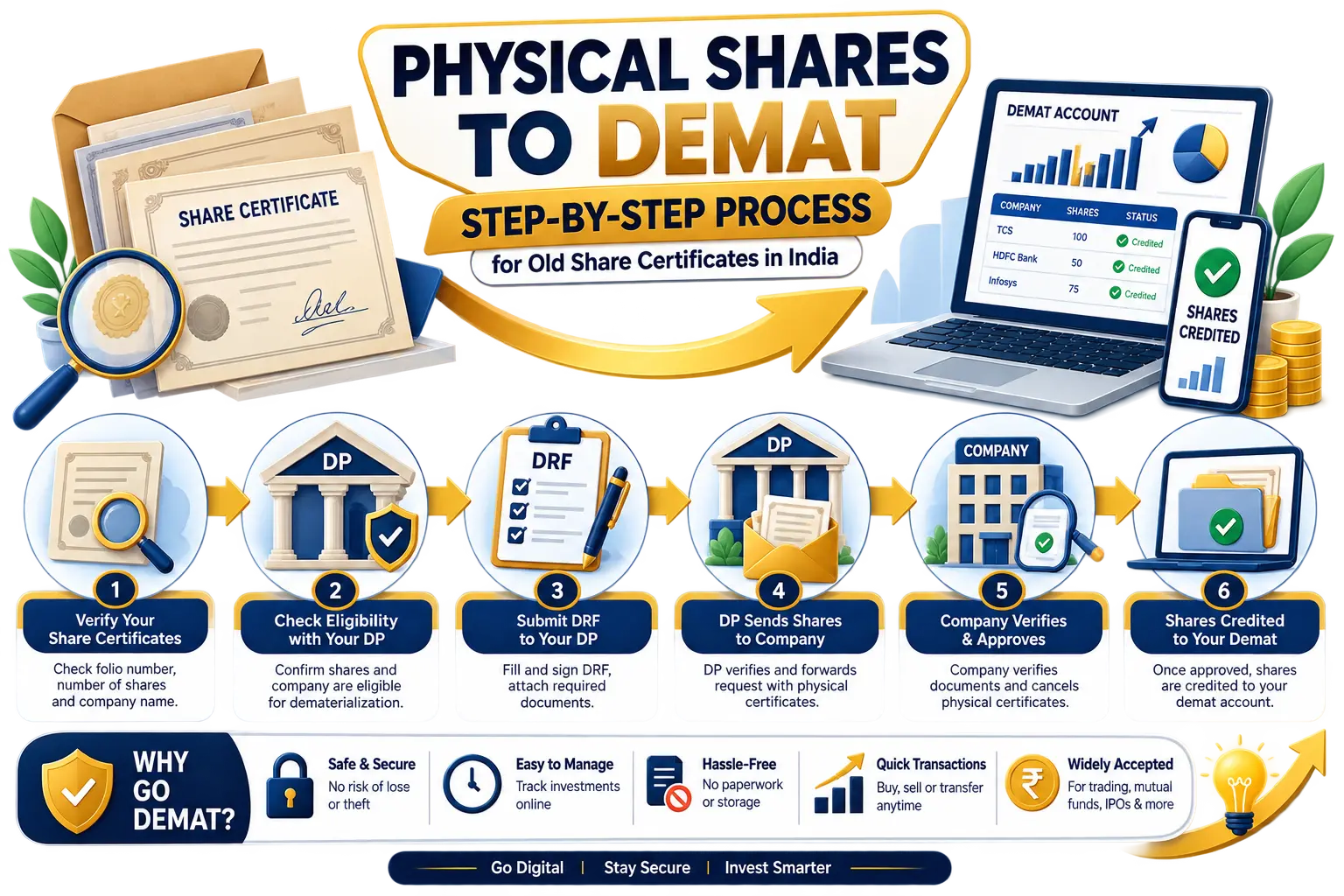
Physical Shares to Demat: Step-by-Step Process for Old Share Certificates in India
- Demat Account
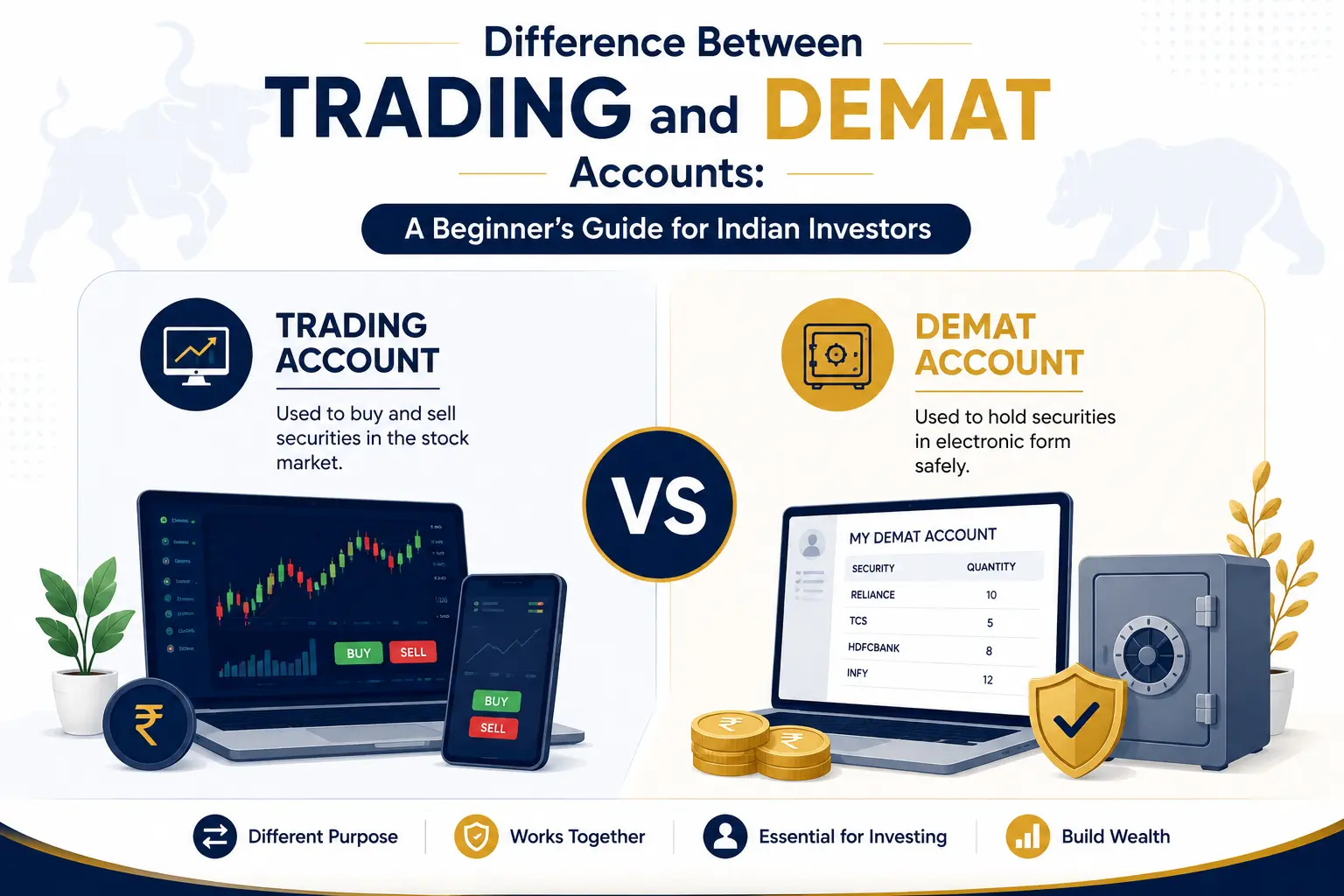
Difference Between Trading and Demat Accounts: A Beginner's Guide for Indian Investors

Was this article helpful?
Need Help?
Talk to our Jaipur franchise desk for Demat, SIP, IPO and research guidance.
Talk to an AdvisorOr open a Demat account