
RBI Repo Rate Hike 2026: MPC Decision, Loan EMI Impact & Economy
RBI Repo Rate Hike 2026 explained: understand MPC decision, inflation concerns, loan EMI impact, FD rates, bonds and economy effects.
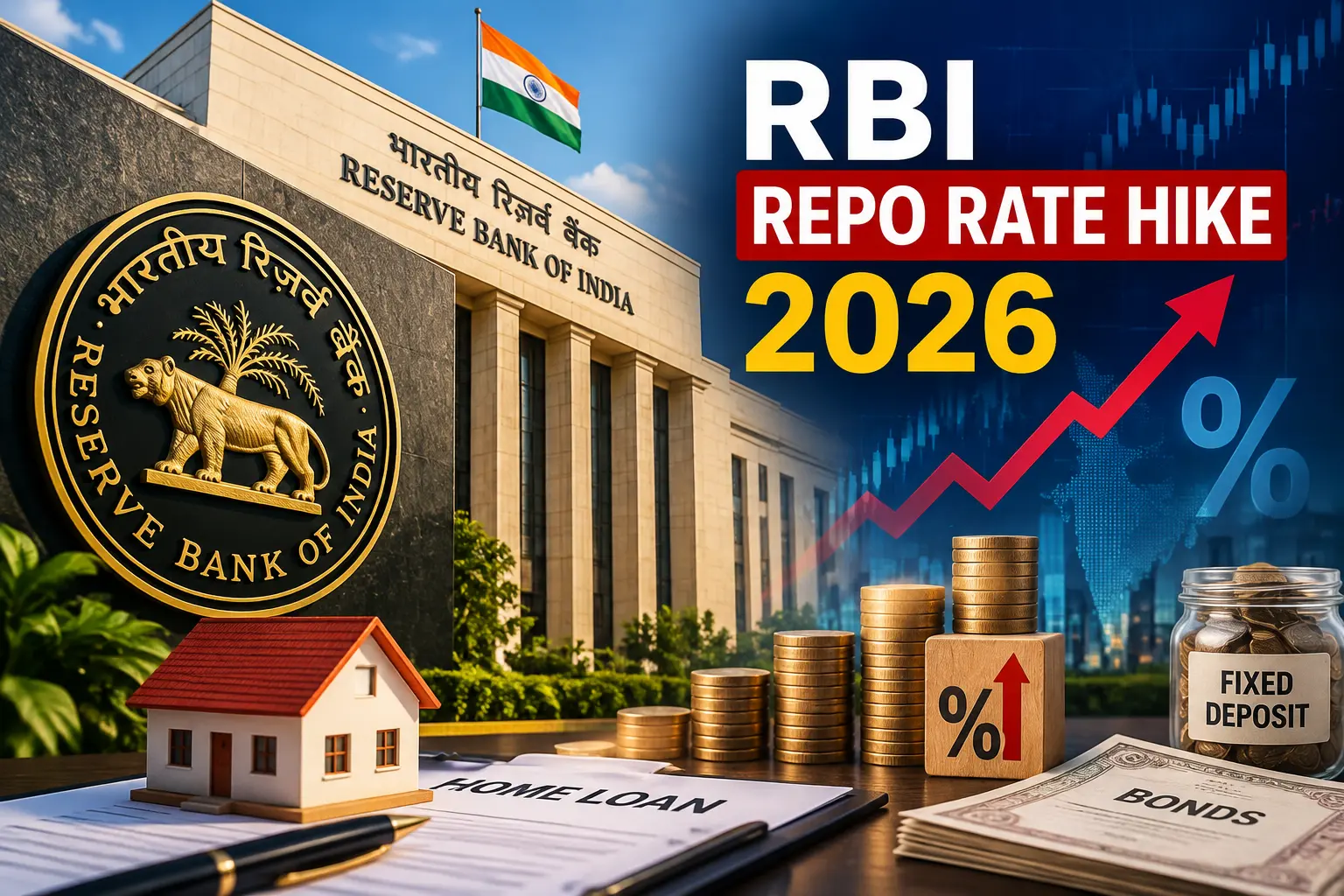
RBI monetary policy and interest rate impact on Indian investors
Summary: Monetary Policy changes affect Bonds, Fixed Deposits, Loans, Inflation and Indian Financial Markets. Learn about RBI Repo Rate Hike 2026 to know more about Monetary Policy Changes.
Key Takeaways
- Changes in repo rates impact costs of borrowing and returns on savings.
- Inflation control remains a key reason for changes in RBI policy.
- Floating interest rate home loan borrowers should be alert to rate changes.
- With a possible rate hike, fixed income and equity investments should be analyzed.
- However, the current financial goals and risk tolerance should determine financial decisions.
The RBI Repo Rate Hike 2026 is currently the talk of the town for borrowers, investors and savers in India. The Reserve Bank of India closely looks into global and domestic economic situation while setting monetary policy. RBI reviews its monetary policy to take into consideration inflation, growth, global rate movements etc. In India, the repo rate largely influences the cost of funds, liquidity in the financial markets, deposit rates and sentiment in financial markets.
RBI’s monetary policy committee is closely looking into international crude oil prices, inflation, FX markets, and Indian domestic economic activity. Based on inflation expectations, most market participants expected RBI to increase rates by 25 bps at its October 2026 monetary policy meeting.
Changes in the repo rate influences the financial products available to households and investors. Changes in RBI’s monetary policy affects fixed deposits, bonds, other debt products, home loans, personal loans, equity markets etc. and therefore, financial planning of households and investors.
RBI Repo Rate Hike 2026: Latest MPC Update
The RBI uses the repo rate as one of its main monetary policy tools. It is the rate at which the central bank lends short-term funds to commercial banks against eligible securities.
Policy Factor | Details |
|---|---|
Central Bank | Reserve Bank of India (RBI) |
Policy Committee | Monetary Policy Committee (MPC) |
Previous Repo Rate | 5.25% |
Expected Policy Direction | Possible tightening due to inflation risks |
Main Objective | Balance inflation control and economic growth |
Before making investment decisions based on monetary policy changes, investors should understand the broader relationship between interest rates, inflation and asset classes. Readers can also explore our educational guide on how RBI repo rate changes affect the stock market.
What is affecting RBI’s decision to hike repo rate?
1. Inflation Pressure Up
The main consideration for RBI on monetary policy decisions is inflation. Rising prices deplete purchasing power and gives an uncertainty in economy. Higher repo rate can help to balance the demand and manage expectations on inflation.
2. Global Interest Rate Situation
In change of the central bank’s monetary policy is influenced by inflation and change in the economy. With higher yields across the globe and shifts in foreign investments may impact the Indian currency and financial markets.
3. Maintaining Stability in Economy
RBI is required to strike a balance between promoting growth in the economy and preventing overheating of inflation. Increase in rate would reduce the demand for borrowing which in turn helps in achieving price stability.
Impact of RBI repo rate hike on Home Loans, EMI
Hike in RBI repo rate increases the rates at which banks’ lend. For floating rates, borrowing cost is determined by the banks’ policy and external benchmark.
Area | Possible Impact |
|---|---|
Home Loans | Floating loan rates may increase, affecting EMI or loan tenure |
Personal Loans | Borrowing costs may rise |
Business Loans | Higher financing costs may affect expansion plans |
Fixed Deposits | Banks may increase deposit rates to attract savings |
What are the Effects on Fixed Deposits and Savings?
Higher interest rates are usually beneficial to fixed deposit investors because banks would be able to offer higher deposit rates, and thereby encourage more savings. But, before making any financial decision, investors should always evaluate FD returns against inflation and taxes.
For investors evaluating fixed income opportunities, our FD vs Bonds: comparison of returns, risk and liquidity guide should be useful to understand various investment instruments.
RBI Repo Rate Hike Impact On Bonds and the Market
Bond prices and yields generally move in opposite directions, meaning changes in interest rates impact the bond market. Changes in rates may also impact the prices of bonds already issued.
Equities may also be impacted as rising rates could negatively impact sectors like Real Estate, Automobiles, Banks, and Consumer businesses. But many other factors may also be at play including Earnings, Liquidity, and Global Market moves.
What do retail investors need to know?
Changes in the repo rate are part of the larger economic management and should not be seen in isolation.
Generally, higher rates help savers and protect savers' value, but make borrowing more expensive.
Understanding risk and the combination of your objectives and time horizon will help guide your investment decisions.
There are opportunities and risks in all asset classes across the various interest rate cycles.
Participation in equity markets requires awareness of account structures and market access. You can find out more about equity trading account and other market access in our resources.
Investors can check out our educational resource on what bonds are and how they work in India.
Conclusion: RBI Repo Rate Hike 2026 demonstrates the relevance of studying monetary policies to understand personal finance and investments. People should be aware of impending policy changes and decide on their investments/loans keeping in mind their personal circumstances, the level of risk they are ready to take etc.
Frequently Asked Questions
What is RBI Repo Rate Hike 2026?+
RBI Repo Rate Hike 2026 refers to a possible increase in the policy repo rate by the Reserve Bank of India to manage inflation and economic conditions.
How does repo rate affect home loan EMI?+
A repo rate increase can influence floating-rate home loans, potentially increasing interest costs depending on lender adjustments.
Why does RBI increase interest rates?+
RBI increases rates mainly to control inflation, manage liquidity and maintain economic stability.
Will FD rates increase after repo rate hike?+
Banks may increase deposit rates when interest rates rise, but actual FD rates depend on bank decisions and market conditions.
How does RBI policy affect stock markets?+
Interest rate changes can influence liquidity, borrowing costs and investor sentiment across sectors.
Disclaimer
This article is for investor education only and does not constitute investment advice, a recommendation, or an offer to buy or sell any security.
Markets involve risk, including possible loss of capital. Please do your own due diligence or consult a registered adviser.
Research views are informational and may change without notice. Past performance is not indicative of future results.
This content is for educational purposes only and should not be construed as investment advice.
Research Team
InvestEdge360 Research
Content Research Desk
Insights from InvestEdge360's research desk — written to help investors learn with clarity and invest with discipline.
Start Your Investment Journey
Explore market participation options with the right account structure and educational resources.
Open Demat AccountRelated Articles

Was this article helpful?
🚀 Open your Demat & Trading account
- Free Account opening charges
- Free DP transaction charges ⭐
- Free premium research & market updates